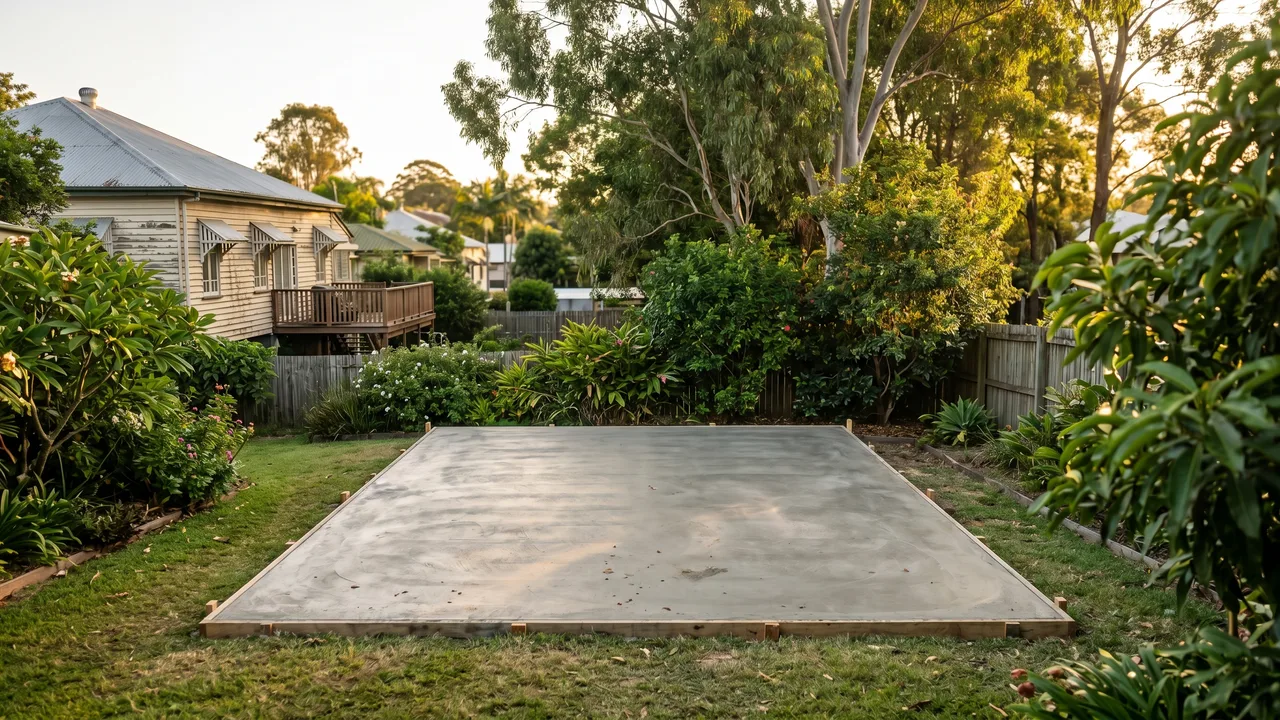
Concreting
Shed and Garage Slab.
Reinforced Concrete Slabs for Sheds and Garages in Chelmer
A shed or garage is only as solid as what it sits on. If you're putting up a new structure on your Chelmer property, a properly prepared and reinforced concrete slab is the right foundation for almost every residential situation. This page explains what the work involves, what it costs in Brisbane's western suburbs, and how to tell whether this is the right service for your block.
What the Work Actually Involves
Pouring a shed or garage slab is a multi-stage job, not a single afternoon's work. Here's what typically happens on site:
Site preparation comes first. The concreter (or their groundwork crew) excavates the area to the required depth, usually 100mm to 150mm depending on the slab design and what the structure above will weigh. In older Chelmer and Graceville properties, tree roots from established gardens can complicate this stage. They get removed and the sub-base is compacted with a plate compactor.
Formwork is then set up around the perimeter, creating the mould for the pour. For a standard single-car garage slab this is relatively straightforward; for a larger shed or a slab with a recessed section for a workshop drain, it takes more setup time.
Steel reinforcement (typically SL72 or SL82 mesh, sometimes bar for heavier loads) is laid inside the formwork on plastic bar chairs to keep it at the correct height within the slab. This is what separates a structural slab from a decorative one. The mesh resists cracking under point loads and ground movement.
The concrete pour uses a ready-mix truck in most cases. For tight access blocks common around Chelmer and Sherwood, a concrete pump is sometimes needed to get the mix where it needs to go. After pouring, the slab is screeded level, bull-floated, and finished to a standard broom or trowel finish suitable for a shed or garage floor.
Curing takes at least a week before you should be loading the slab. Full strength is typically reached at 28 days.
When You Actually Need This Service
You need a new shed or garage slab when:
- You're installing a Colorbond or timber shed for the first time and the supplier requires a concrete base (most do).
- You're replacing a timber floor garage with a concrete-based structure.
- Your existing slab has cracked, heaved, or is no longer level enough for the structure you want to use it for.
- You're adding an outbuilding (workshop, garden shed, pool pump enclosure) to your backyard.
There's no strong seasonal window for this work in Brisbane. Concrete can be poured year-round here, though scheduling around prolonged rain events makes life easier and protects the fresh pour. Spring and autumn tend to be busy periods for shed installs across Indooroopilly, Taringa, and Moorooka.
What It Typically Costs in Brisbane
For a residential shed or garage slab in the western suburbs, expect to pay roughly:
- Small garden shed slab (3m x 3m): $1,500 to $2,500
- Single-car garage slab (approx. 6m x 3.5m): $2,800 to $4,500
- Double garage or large workshop slab (6m x 6m+): $5,000 to $8,500 and above
These are indicative ranges. The main factors that move the price are:
- Access. If a ready-mix truck can get close, costs stay down. If you need a pump (common on narrow Chelmer and Sherwood allotments), add $600 to $1,200 typically.
- Excavation depth and soil type. Rocky or heavily compacted clay takes longer to dig out.
- Slab thickness. A 100mm slab suits most garden sheds; a heavier workshop or a slab that needs to carry a vehicle may need 150mm and more steel.
- Site levelling. A flat block is straightforward. A sloped block requires either cut-and-fill earthworks or a thicker slab edge, both of which add cost.
What's in the Quote (and What Isn't)
A standard quote for this service typically covers excavation, formwork, reinforcing mesh, the concrete pour, finishing, and basic strip of the formwork once cured.
It typically does not include:
- Council building approvals (required for most garages and some sheds over a certain size, check with Brisbane City Council)
- Plumbing or electrical rough-ins through the slab
- Significant tree root or rubble removal beyond a standard clean site
- Concrete pump hire (often quoted separately if access requires it)
Ask your provider to itemise these clearly before accepting a quote.
Is This the Right Service for Your Property?
This service suits you if you're starting from bare ground or removing an existing structure and starting fresh. If you already have a slab that's showing cracks or surface damage but is structurally sound, concrete repair and resurfacing may be the more cost-effective path. If you're building a patio or alfresco area attached to your home, that's a different scope covered under our outdoor entertaining slab service.
A Note on Safety and Qualifications
Concrete work in Queensland involves considerations beyond just mixing and pouring. Slabs for habitable structures or anything over a certain size may require a licensed builder or building approval. Confirm this with your provider before work starts. Anyone working on your site should hold current public liability insurance. We connect you with local providers who carry appropriate cover; we're transparent that our role is referral, not direct contracting.
If you're ready to get a clearer picture of what your slab will cost and what's involved on your specific block, a quick call is the fastest way to find out.
Quick answers
Frequently asked.
How thick does a shed or garage slab need to be in Brisbane?
Do I need council approval for a shed slab in Chelmer?
How long before I can put my shed up after the slab is poured?
Can a concrete slab be poured on a sloped Chelmer block?
What if a concrete pump is needed to reach my backyard?
Is a concrete slab better than a timber floor for a backyard shed?
Ready to book
Quickest is by phone.
Up-front pricing on the call. Booked in one go. No site visit needed.