Concreting
Exposed Aggregate Finish.
Exposed Aggregate Concrete in Chelmer and the Western Suburbs
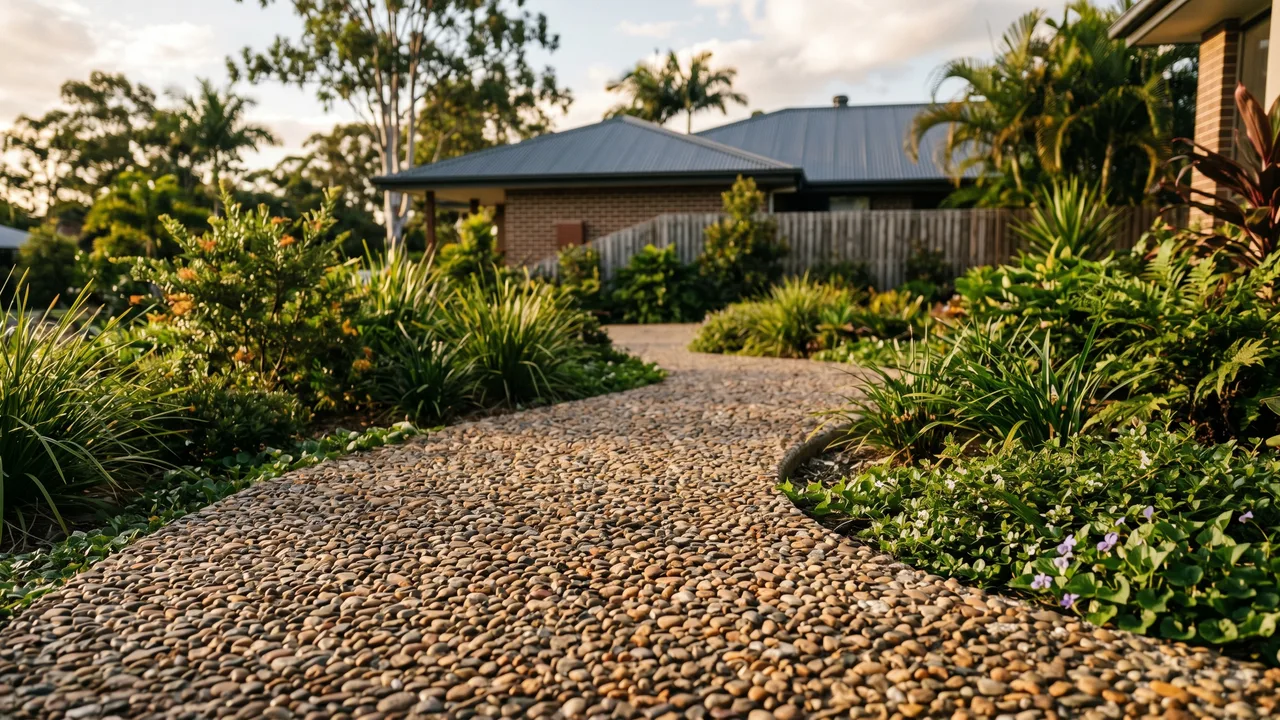
Exposed aggregate is one of the more practical decorative finishes for Brisbane homes. It looks sharp, hides dirt reasonably well, and gives you a non-slip surface that holds up through wet summers and dry winters. If you've walked up a driveway or path in Chelmer or Indooroopilly and noticed that pebbly, textured surface with small stones set into the concrete, that's exposed aggregate.
What the Work Actually Involves
The process starts like any concrete pour: subgrade preparation, forming up the edges, laying reinforcement (typically steel mesh or rebar depending on the load the slab will carry), and then pouring the concrete mix. What sets exposed aggregate apart is what happens before the surface sets.
The concretor spreads a layer of decorative aggregate, usually river pebbles, crushed bluestone, or a mixed-stone blend, into the wet surface. A surface retarder is then applied. This chemical slows the curing of the top few millimetres of cement paste while the body of the slab continues to harden underneath. Once the timing is right, the concretor pressure-washes the surface to expose the stones, revealing the texture and colour of the aggregate beneath.
A penetrating sealer goes on after curing, typically 28 days after the pour. The sealer protects against staining, brings out the colour of the stones, and needs to be reapplied every few years.
The equipment involved includes a concrete pump or wheelbarrow runs (depending on access), a float, a bull float for larger slabs, the pressure washer for the wash-off stage, and a sprayer for retarder and sealer.
When Does a Chelmer Home Need This?
Most homeowners looking at exposed aggregate are either building new or replacing a tired plain-grey driveway or path that's cracked, spalling, or simply dated. A few situations to watch for:
- Your existing driveway has significant cracking (wider than around 5mm, or cracks that move underfoot) and resurfacing won't fix the underlying problem
- You're building a new shed slab, entertaining area, or front path and want something more polished than broom-finished concrete
- Your current surface is slippery when wet, which is a real concern in Brisbane's summer storm season, especially under large trees like the poinciana or jacaranda species common through Chelmer and Graceville
There's no strict seasonal window for pouring concrete in Brisbane, but the cooler months from May through August are generally more forgiving. Extreme heat in January and February can affect curing and requires extra care.
What Does It Cost?
For exposed aggregate work in the western suburbs, budget roughly $100 to $150 per square metre as a starting point for straightforward residential jobs. A standard double driveway (around 40-50 sqm) typically lands somewhere between $4,500 and $7,500 fully installed. Smaller paths and courtyard areas are similar on a per-square-metre basis but sometimes carry a minimum call-out component.
Several things move that number:
- Aggregate choice: Basic river pebble blends are cheaper than coloured crushed stone or premium mixed aggregates
- Access: Tight Queenslander blocks, steep sites, or narrow side gates that rule out a concrete truck can add cost for pumping or manual handling
- Thickness and reinforcement: A driveway carrying vehicles needs more depth and reinforcement than a pedestrian path
- Demolition and removal: If there's an existing slab to break out and haul away, expect that to be quoted separately
- Site preparation: Poor subgrade, tree roots, or significant level changes add groundwork before a drop of concrete is poured
What's Typically in the Quote
A standard quote from a local concretor should include forming, reinforcement, the pour, aggregate placement, the retarder application, wash-off, and the first sealer coat. Demolition of an existing slab, major earthworks, and council permits (where required) are typically separate line items. Ask upfront so there are no surprises on the day.
Is Exposed Aggregate Right for Your Property?
It suits most residential applications in this area: driveways, front paths, pool surrounds, and entertaining slabs. A few honest caveats:
- The texture means it's harder to sweep fine debris and leaf litter compared to a smooth finish. Chelmer and Sherwood properties with large deciduous or flowering trees might find this more noticeable
- It's not a good candidate for resurfacing over an existing damaged slab. If the base is compromised, you need to address that first
- The sealer does need reapplication, typically every 3 to 5 years depending on exposure and traffic
If your main goal is cost, plain broom-finished concrete is cheaper per square metre. Exposed aggregate earns its price through longevity, texture, and appearance.
A Note on Safety and Qualifications
Concrete work in Queensland doesn't require a formal trade licence in the same way that electrical or plumbing does, but you still want someone with demonstrated experience handling retarder timing correctly. Get that wrong and you either wash off too early (aggregate pulls away with the paste) or too late (the surface is too hard to wash at all). Ask to see examples of completed work locally and confirm your provider carries public liability insurance before work starts.
We connect Chelmer and western suburbs homeowners with local providers who carry appropriate insurance. If you'd like to get a quote for exposed aggregate on your driveway or outdoor area, reach out and we'll put you in touch.
Quick answers
Frequently asked.
How long does exposed aggregate concrete last in Brisbane's climate?
Can exposed aggregate be poured over my existing concrete driveway?
What aggregate colours and stone types are available in Brisbane?
Does exposed aggregate get slippery when wet?
Do I need council approval for a new driveway or path in Chelmer?
How soon can I drive on a new exposed aggregate driveway?
Ready to book
Quickest is by phone.
Up-front pricing on the call. Booked in one go. No site visit needed.