Concreting guide
Should you repair or replace your concrete driveway?
Should You Repair or Replace Your Concrete Driveway?
The honest answer is: it depends on how much of the slab is damaged, not just how bad the worst spot looks. A single crack or a patch of surface spalling is usually worth repairing. Widespread structural failure, or a slab that's shifting and cracking in multiple places, almost always warrants a full replacement.
That said, the line between "repair it" and "rip it out" is blurry, and plenty of concreters will tell you different things depending on what work they prefer to take on. This article lays out the key factors so you can make a clear-headed decision before you spend a dollar.
What Kind of Damage Are You Actually Looking At?
Concrete damage falls into two broad categories: surface damage and structural damage. They look similar from a distance but have very different implications.
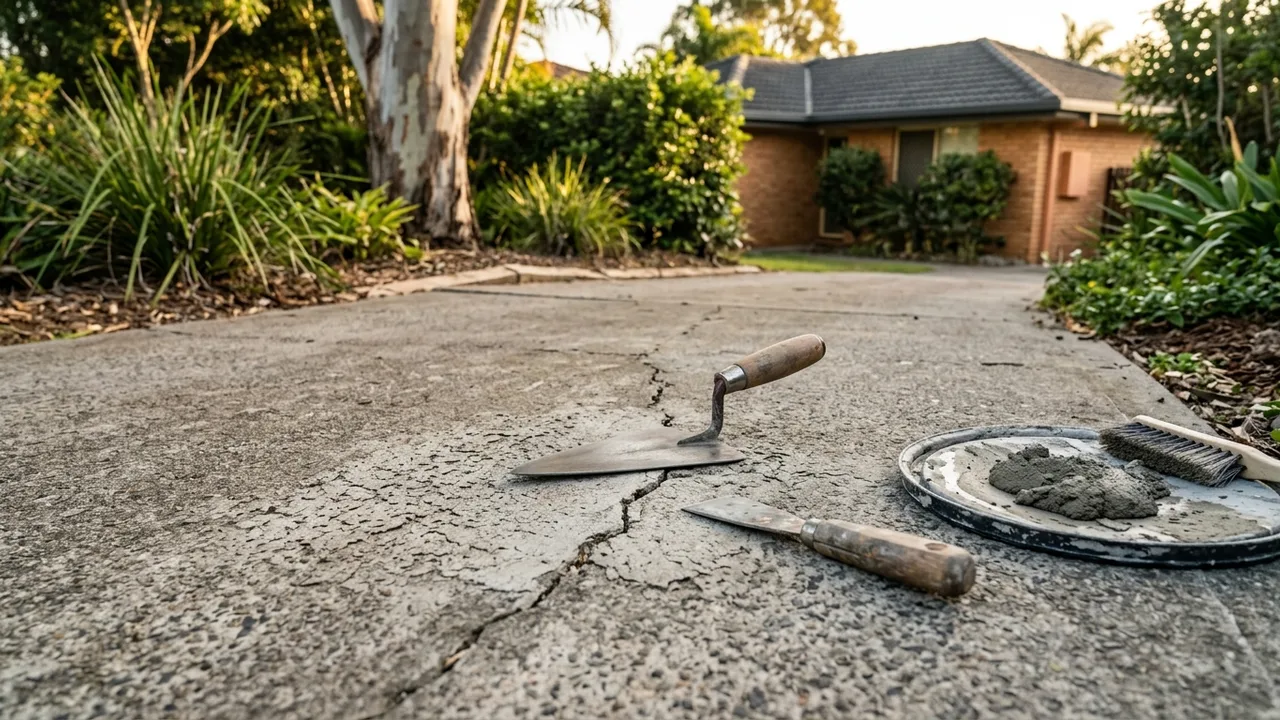
Surface damage includes:
- Spalling (where the top layer flakes or pits, often from weathering or chemical exposure)
- Minor hairline cracks less than about 3mm wide
- Discolouration, staining, or surface erosion
- Small pop-outs from aggregate exposure
These are cosmetic or shallow problems. In most cases, a good resurfacing job or targeted crack repair will restore both the look and function of the slab for another decade or more.
Structural damage is a different matter. Look for:
- Cracks wider than 5-6mm, especially ones that run the full depth of the slab
- Sections that rock or flex when you walk or drive over them
- Sunken or heaved panels where the sub-base has shifted
- Crumbling at the edges that extends several centimetres inward
If you're seeing structural damage across more than roughly a third of your driveway, repair costs start chasing replacement costs fast, and the result is often patchwork that's obvious and short-lived.
Why Brisbane Conditions Matter More Than You'd Think
Brisbane's climate does specific things to concrete that you won't read about in general guides written for cooler climates.
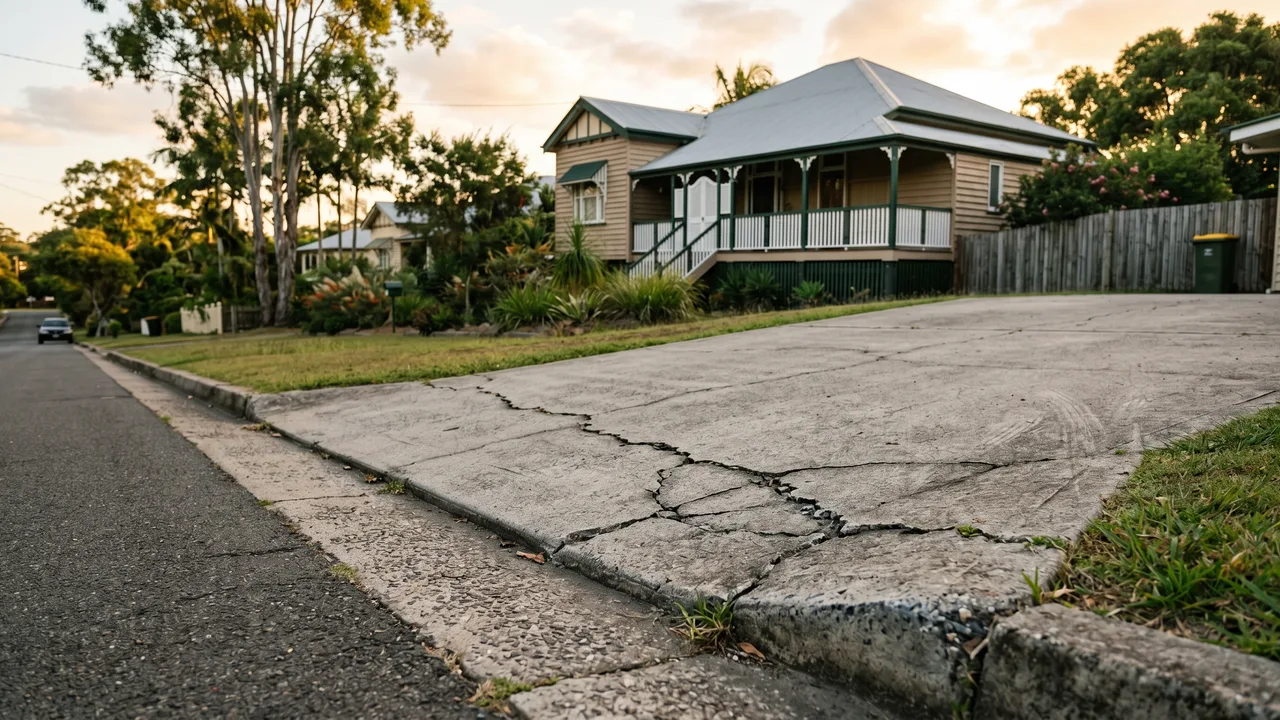
The Inner West suburbs (Chelmer, Graceville, Sherwood, Corinda and neighbours) sit on clay-heavy soils. Clay expands when wet and contracts in dry spells, and Brisbane's wet-dry pattern is dramatic. A slab that was poured without adequate sub-base preparation, or on reactive clay that wasn't properly treated, will often shift over time. No amount of resurfacing fixes movement caused by what's underneath.
The other factor is tree roots. Chelmer, Indooroopilly, Taringa and Yeronga all have older streetscapes with large fig trees, Poinciana, and Jacaranda. Roots from street trees and neighbouring properties push under slabs gradually, then suddenly. If you're seeing a section of driveway that's lifted at an angle, roots are a likely culprit. Repairing the concrete without addressing the root is a short-term fix.
Heat also plays a role. Concrete laid without adequate expansion joints will crack in Brisbane summers. If your existing slab lacks those joints, or if they've filled and hardened, thermal cracking is expected. This is repairable, but it's worth understanding why the cracking keeps coming back.
What Does Repair Actually Cost Versus Replacement?
Costs vary considerably depending on access, the volume of damage, and the finish required. These are rough figures to give you a sense of scale.
Repair options:
- Crack filling and sealing: typically $150-$400 for a standard residential driveway
- Resurfacing (applying a new wear layer over the existing slab): typically $800-$2,500 for a single-car driveway, more for larger areas or decorative finishes
- Targeted patch repair for a small sunken or broken section: typically $500-$1,200
Replacement:
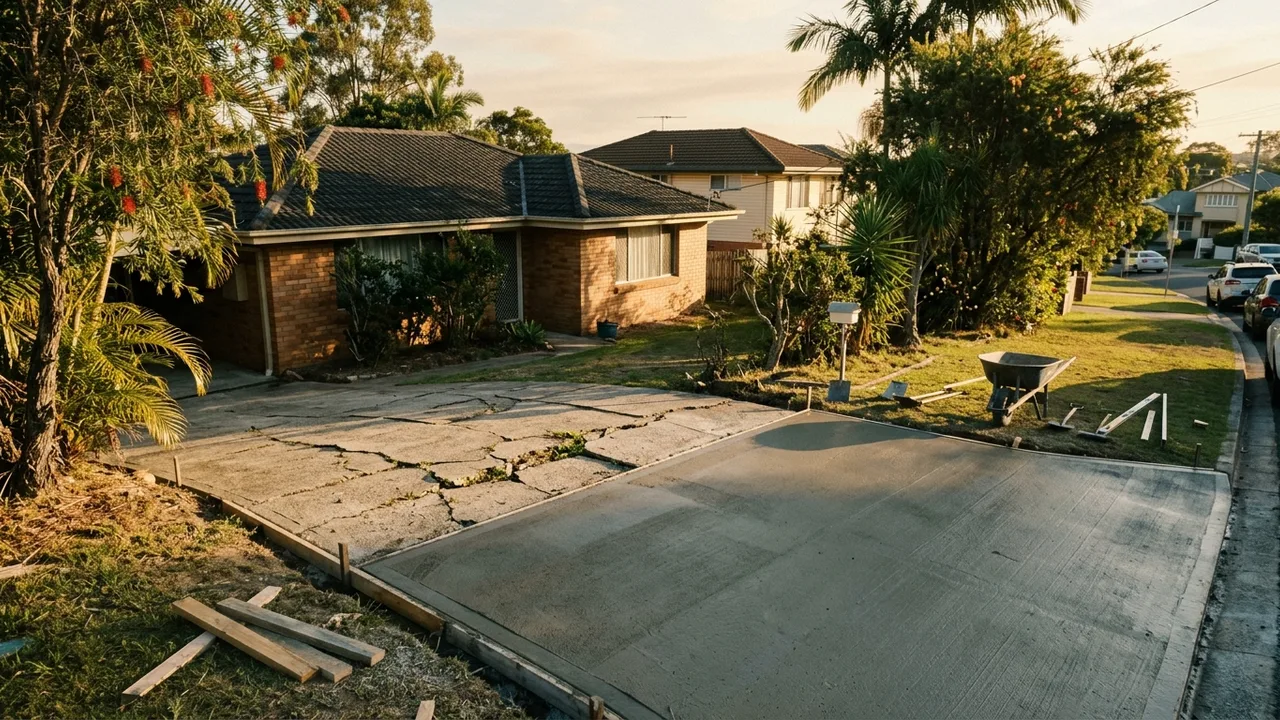
- Removing and replacing a standard single-car concrete driveway: typically $3,000-$6,000
- Double driveway or longer runs to a rear garage: typically $6,000-$12,000 or more
The crossover point is usually around 40-50% damage. Once you're spending $2,000 or more on repairs, it's worth getting a replacement quote for comparison. Sometimes the gap is smaller than expected, and replacement comes with a warranty on new work, a consistent finish, and the chance to correct any sub-base or drainage issues that caused the damage in the first place.
One cost people often overlook: demolition and disposal of the old slab adds roughly $500-$1,500 to a replacement job, depending on slab thickness and access.
The Case for Repairing (When It Makes Sense)
Repair is the right call more often than the full-replacement crowd admits. A well-executed resurfacing job can add 10-15 years to a sound slab. If the structural integrity is there (the slab isn't moving, the sub-base is stable, and you're dealing with surface wear), repair is typically better value.
It's also faster. Resurfacing or crack repair on an existing slab can often be done in a day, with cure time of 24-48 hours before you can drive on it. A full replacement involves demo, prep, pouring, and then waiting the better part of a week.
If you're planning to sell within a few years and the driveway just looks rough but functions fine, a clean resurfacing is often enough to lift kerb appeal without the cost of full replacement.
The Case for Replacing (When Repair Is a False Economy)
There are situations where patching is genuinely throwing money away.
If the slab is thin (older Brisbane homes sometimes have driveways poured at 75mm or less, when 100mm is now the standard for a residential driveway), it may not have the structural capacity for resurfacing products to bond reliably. A resurfacing layer needs something solid to adhere to.
If the sub-base has eroded or settled badly (common in areas with poor drainage or old tree root systems), any new concrete placed on top will follow the same movement pattern. The repair lasts 12-18 months and you're back to square one.
And if the damage is spread across the full slab with multiple types of failure present at once (cracking, movement, spalling, edge crumbling), the repair quote often approaches or exceeds replacement. At that point you're paying repair money for a result that looks and performs below what new concrete would give you.
How to Get a Useful Assessment
The only way to know for certain is to have someone walk the driveway with you and look at what's underneath, not just the surface.
A few things that help before anyone arrives:
- Note where the cracks are and whether they've grown (mark them with chalk and date it)
- Check whether any sections rock when you step on them
- Look at drainage around the perimeter. Does water pool near the slab after rain? That can accelerate sub-base erosion.
- Find out when the driveway was poured if you can. Slabs over 25-30 years old poured without fibre reinforcement are more likely candidates for replacement.
When you get quotes, ask specifically whether the proposed repair addresses the cause of the damage or just the symptom. A good operator will be upfront about the expected lifespan of a repair versus a replacement in your specific situation.
A Straight Recommendation
If the damage is mostly cosmetic and the slab isn't moving: repair it. A proper resurfacing from a competent concreter will give you years of good service and costs a fraction of replacement.
If the slab is shifting, the sub-base is compromised, or the damage covers most of the area: replace it. It will cost more upfront, but you won't be back here making the same decision in two years.
When you're genuinely on the fence, get two opinions, one from a contractor who does repairs and one who does replacements, and compare what each says about the root cause. If they agree on the diagnosis but differ on the solution, that tells you something useful.
If you're based in Chelmer, Graceville, Sherwood, or the surrounding Inner West suburbs and want to talk through what you're seeing, we can connect you with a local concrete contractor who'll give you a straight assessment rather than a sales pitch.
Quick answers