Concreting guide
Can you pour your own concrete slab or is it a job for a pro?
Can You Pour Your Own Concrete Slab or Is It a Job for a Pro?
The honest answer is: it depends on the size and purpose of the slab. A small garden path or a modest shed base under 10 square metres is genuinely within reach for a capable DIYer. Anything larger, load-bearing, or structurally tied to a home, including driveways and garage slabs, is almost always better left to a professional concreter.
That's not a sales pitch. It's just a realistic look at what the job actually involves.
What Makes Concrete Work Harder Than It Looks
Most people who've watched a concrete pour think the hard part is mixing. It's not. The hard part is everything that happens before and after the mix arrives.
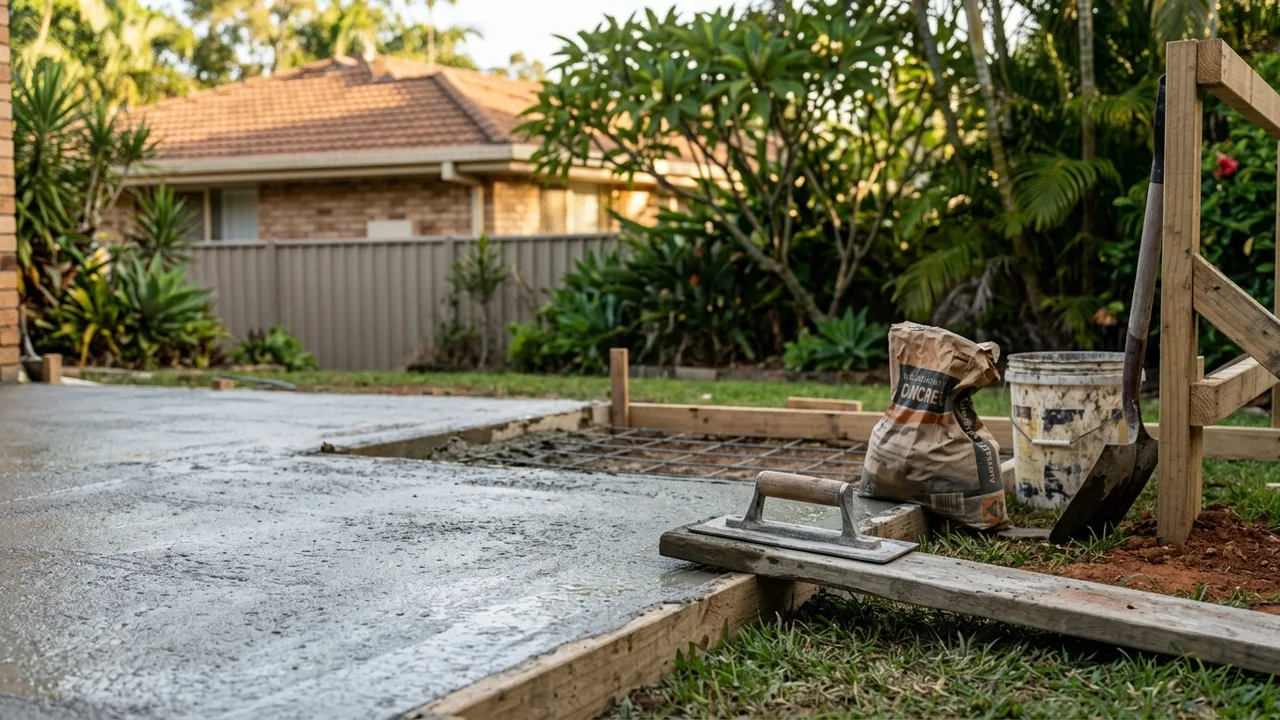
Before the pour, you need to:
- Excavate and compact the sub-base to a consistent depth (typically 100mm for a residential slab, more for heavy vehicle use)
- Set formwork that is level, square, and strong enough to hold wet concrete without bowing
- Lay reinforcing mesh or rebar at the correct height within the slab (not resting on the ground, which defeats the purpose)
- Order the right concrete strength for the application (a standard residential slab typically uses 20MPa or 25MPa mix, but a driveway taking regular vehicle loads should be 25MPa at minimum)
- Arrange the pour to happen in a single continuous session with no cold joints
During the pour, the work is relentless. Wet concrete has a working window of roughly 30 to 90 minutes depending on temperature, mix design, and admixtures. In Brisbane's climate, especially in summer, that window can be painfully short. You're screeding, floating, and edging against the clock.
After the pour, curing matters more than most DIYers realise. Concrete that dries too fast (common on hot Brisbane days) develops surface cracks and weakens significantly. Proper curing means keeping the slab moist or covered for at least three to seven days.
None of this is impossible for a determined homeowner, but underestimating any one of these steps is where DIY slabs typically go wrong.
The Cost Argument: DIY vs Hiring a Pro
The main reason people consider doing it themselves is cost. That's fair. A professional concreter in Brisbane's western suburbs will typically charge somewhere in the range of $65 to $120 per square metre for a standard slab, depending on access, finish, thickness, and site conditions. For a 6 x 6 metre garage slab, you're looking at roughly $2,500 to $4,500 supplied and finished.
DIY materials for the same slab, including concrete supply (readymix delivery), mesh, formwork timber, release agent, and hire of a bull float and screed, might come to $1,200 to $2,000. So the saving is real, potentially $1,000 to $2,500 on a job that size.
But factor in:
- Labour: a 6 x 6 metre slab is a full day of physical work for two or three people, minimum
- Equipment hire: a plate compactor, concrete vibrator, and finishing tools add up
- Risk of a bad outcome: a slab that cracks badly or heaves may need professional repair or full removal, which costs more than the original pour would have
- Time: sourcing materials, organising delivery, coordinating helpers, and cleaning up often stretches a "weekend job" across two or three weekends
For small projects, the maths often favour DIY. For anything medium to large, the gap narrows quickly.
Brisbane-Specific Conditions That Affect the Job
Brisbane's subtropical climate and the specific soil types across the Inner West add a few wrinkles worth knowing about.
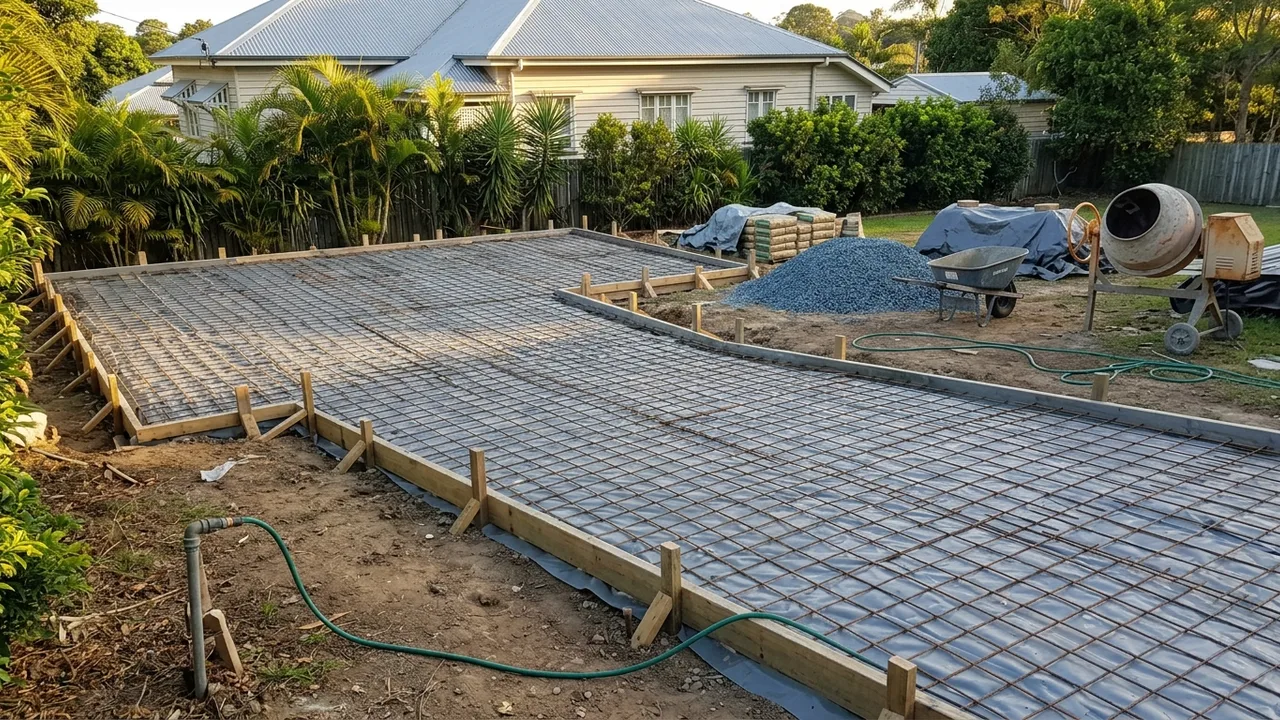
Clay soils are common across suburbs like Chelmer, Graceville, Sherwood, and Corinda. Reactive clay expands when wet and contracts in dry periods. A slab poured directly onto poorly prepared clay sub-base will move, and movement causes cracking. Professional concreters in this area typically over-excavate and bring in compacted road base (crusher dust or gravel) to create a stable, non-reactive layer beneath the slab. Skipping this step is one of the most common DIY mistakes in this part of Brisbane.
Slope and drainage are also a factor across much of the Inner West, where properties step down toward the river. Slabs on sloped blocks need careful forming and sometimes need to be poured in stages or on stepped footings. This is well beyond beginner DIY territory.
Summer heat compresses your working window significantly. A 32-degree Brisbane afternoon in January is a stressful environment for concrete finishing. Professionals typically schedule pours for early morning, and some use retarder admixtures to extend workability in hot weather. If you're doing this yourself, aim for winter months (June to August) for noticeably more forgiving conditions.
Jacaranda and other tree roots in older suburb streetscapes, including many Queenslander-era blocks in Chelmer and Taringa, can undermine sub-base stability if not addressed. Always check for significant root intrusion before forming up.
Which Jobs Are Genuinely DIY-Friendly?
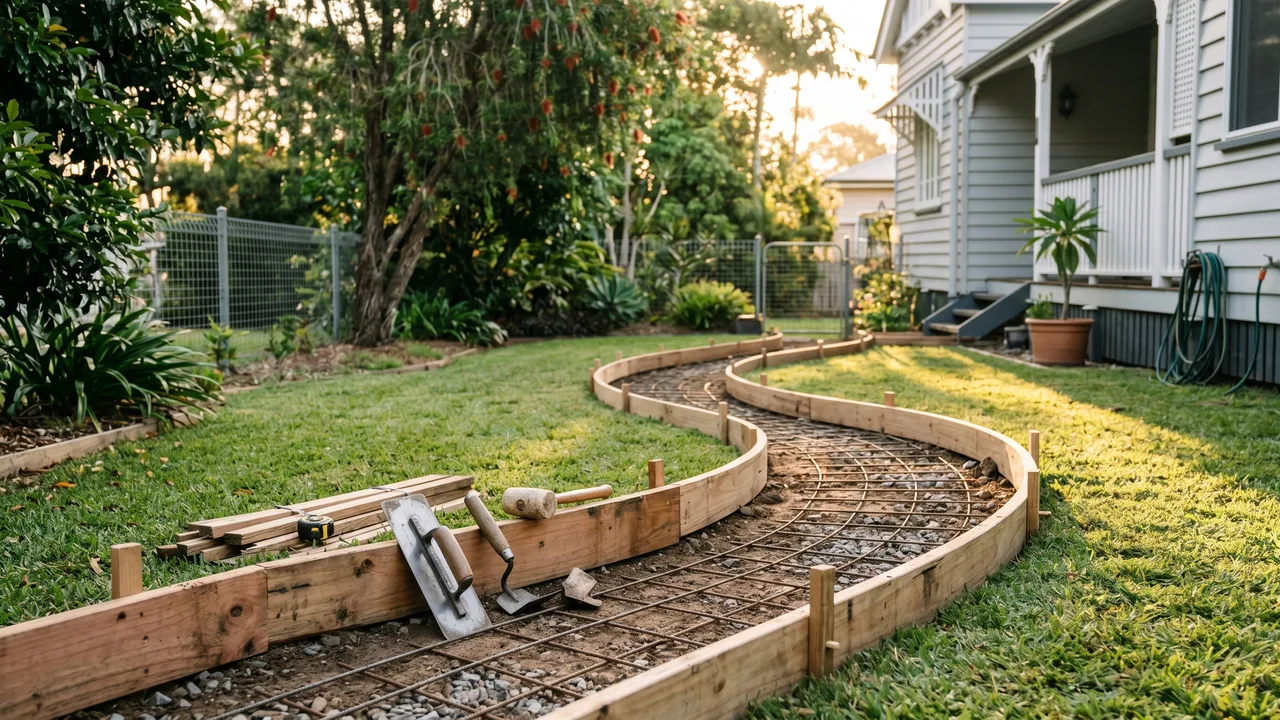
Being straight with you: some concrete jobs are reasonable DIY projects. These include:
- Stepping stones or small garden paths (under 5 linear metres of 500mm-wide path)
- A simple shed base on flat, stable ground, under roughly 9 square metres
- Small repair patches on an existing slab, using bagged rapid-set concrete
For these smaller jobs, you can buy bagged concrete mix from a hardware store and mix it in a rented drum mixer. You avoid the pressure of a full readymix truck delivery (which typically has a minimum load of around 0.2 to 0.5 cubic metres, depending on the supplier, and a waiting time charge if you're not ready).
The jobs that are best left to a professional include:
- Driveways, which take vehicle loads and need correct thickness, reinforcement, and possibly council compliance
- Garage and carport slabs, which are structural and often need to meet building code requirements
- Alfresco or entertaining slabs connected to or adjacent to the house, where drainage, falls, and finished appearance all matter
- Any slab over roughly 15 square metres, where the logistics of a readymix pour and the physical labour of finishing become genuinely difficult to manage without experience
What to Ask a Concreter Before You Hire One
If you decide to go the professional route, asking a few specific questions helps you sort a reliable operator from someone who's going to give you problems down the track.
Ask them:
- What concrete strength (MPa) do you specify for this job, and why?
- How do you prepare the sub-base, and do you bring in road base?
- Is reinforcing mesh included, and at what gauge?
- How do you handle curing after the pour?
- Do you include expansion joints, and where will you place them?
- Are you licensed and insured for concreting work in Queensland?
A concreter who gives clear, specific answers to those questions is generally someone worth dealing with. Vague answers, or a push to skip the sub-base prep to save money, are warning signs.
The Bottom Line
If your project is small, simple, and on flat stable ground, giving it a go yourself is a reasonable option. Budget carefully, plan your sub-base properly, and pick a cool morning in winter.
If you're looking at a driveway, a garage slab, or anything that sits adjacent to your home, the risk profile changes enough that professional work makes more sense for most people. A slab poured correctly will last 25 to 40 years with minimal maintenance. One poured on a poor sub-base or with inadequate reinforcement might start cracking within two or three years.
For homeowners across Chelmer, Sherwood, Graceville, and the surrounding western suburbs, Concreting Chelmer connects you with local concreters who work in your area regularly and know the soil and slope conditions here. If you'd like a quote on a specific job, a quick call is a good starting point. No obligation, just an honest look at what your project involves.
Quick answers