Concreting guide
How does Brisbane's western suburbs soil affect your concrete work?
Brisbane's western suburbs sit on some of the most reactive soil in southeast Queensland. That soil directly affects how concrete behaves over its lifetime — from the day it's poured to ten or twenty years down the track when cracks start appearing that seem to come from nowhere.
What "reactive soil" actually means for your slab
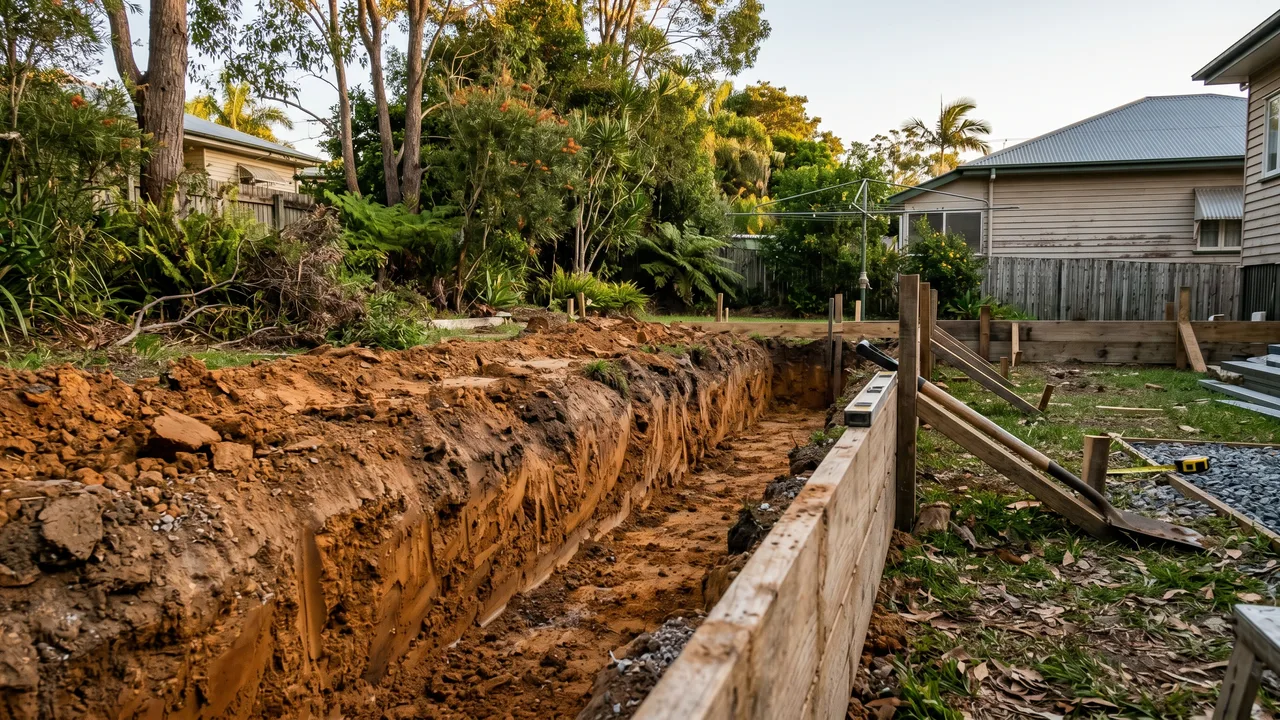
Reactive soil is clay-heavy soil that swells when it gets wet and shrinks when it dries out. The technical classification you'll sometimes see on soil reports is an "M", "H1", "H2" or "E" site classification, where M is mildly reactive and E is extremely reactive. Much of the Inner West Brisbane corridor — Chelmer, Graceville, Corinda, Sherwood and stretches of Indooroopilly — sits on what geotechnical assessors typically classify as H1 or H2 ground.
What that means in plain terms: the ground underneath your slab is never fully still. In a dry summer it contracts. After heavy rain it expands. That constant movement is working against the concrete above it, especially if the slab wasn't designed to handle it.
The Brisbane River floodplain influence matters here too. Suburbs close to the river — Chelmer, Graceville, Yeronga, parts of Sherwood and Corinda — can have higher moisture content in the sub-base year-round, not just during rainfall events. That keeps the soil active for longer between seasons.
Why standard residential concrete sometimes fails early in this area
A 100 mm unreinforced slab that might last thirty years in sandy coastal soil near Redcliffe can crack and heave in five years in Chelmer if the groundwork isn't right. The failure isn't always the concrete itself. It's usually one of three things:
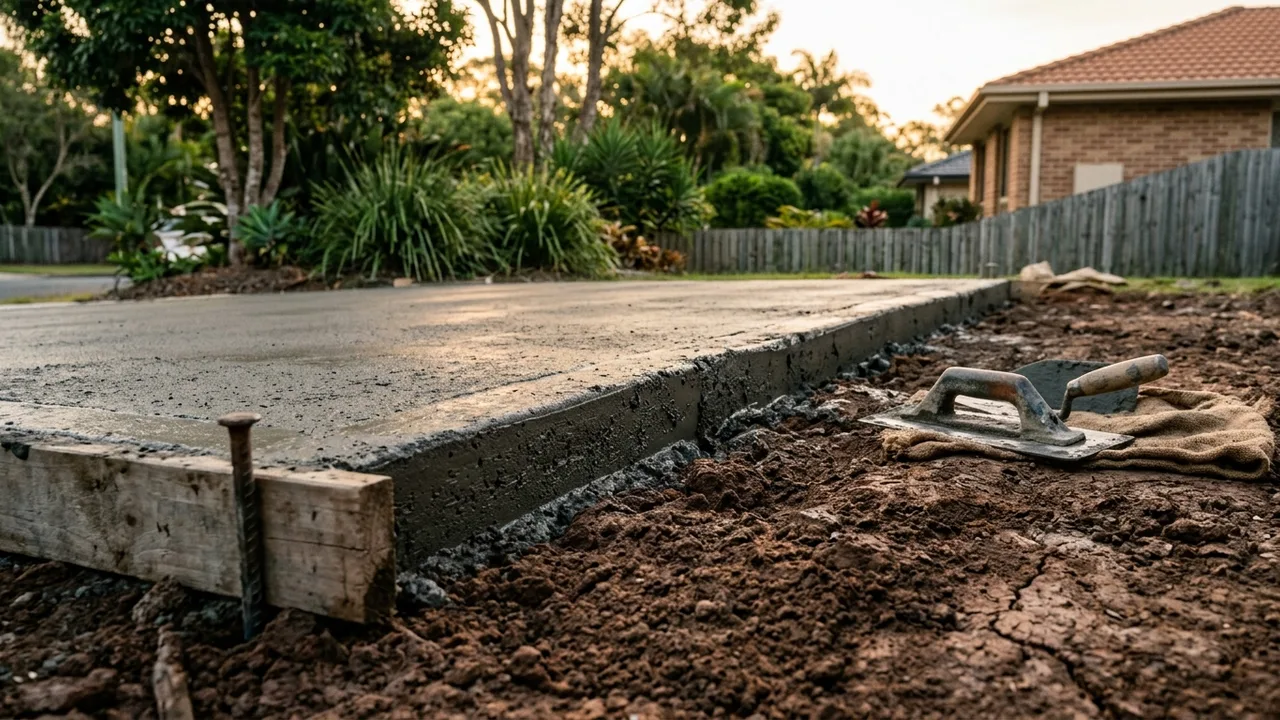
- Inadequate compaction of the sub-base. If the soil below hasn't been compacted properly before the pour, settlement is almost guaranteed when the clay cycles through wet and dry.
- No reinforcement, or undersized reinforcement. Steel reinforcement (typically mesh or rebar) holds the slab together when the ground moves. Without it, reactive soil wins.
- Poor drainage planning. Water pooling around a slab keeps the clay in a swollen state. When it eventually dries and contracts, the slab drops with it — unevenly.
This isn't a criticism of any particular concreters. Older slabs in suburbs like Fairfield, Moorooka and Taringa were often poured to standards that predate what we now know about reactive site management. If your driveway or patio slab is 20-plus years old and starting to show corner lifting or long diagonal cracks, reactive soil is a reasonable first suspect.
What good concrete work looks like on reactive ground
A concreters who understands Brisbane western suburbs soil will typically do the following, even if they don't narrate every step to you:
Site classification first. For anything larger than a footpath, a competent operator checks the existing soil report (if one exists for the property) or requests one. For a simple garden path it may not be warranted. For a garage slab or long driveway in Chelmer or St Lucia, skipping this step is a false economy.
Sub-base preparation. This usually means compacting the existing subgrade, then adding a layer of compacted road base (typically 75-100 mm for a driveway) before any concrete goes down. In high-reactivity areas, some operators use a sand or granular layer specifically to allow slight differential movement without transferring stress directly to the slab.
Reinforcement matched to the site. SL72 or SL82 steel mesh is a common minimum for residential slabs in this region. On an H2 or E site classification, or for a heavy-use slab like a garage floor that'll take a loaded trailer, heavier reinforcement or a thicker pour (125 mm+) may be warranted. Your concreters should be able to explain what they've specified and why.
Control joints. These are the planned saw cuts or formed joints you see in a finished slab. They're not decorative. They give the concrete a predetermined place to crack if movement occurs, so the crack follows a straight line you planned rather than a diagonal line you didn't. Spacing them correctly for the slab size matters — typically every 3 m or so for a residential driveway slab, though this varies with thickness and reinforcement.
Curing time and method. Reactive soil is particularly unforgiving if a slab is rushed into service before adequate strength is reached. Full structural strength in standard concrete takes around 28 days. A new slab shouldn't take vehicle loads for at least 7 days, and that assumes correct curing conditions. In a Brisbane summer (hot, low-humidity days are common in January-February even in the Inner West), curing compound or wet hessian covers help prevent too-rapid surface drying.
DIY vs professional: an honest look at the trade-offs
Some homeowners in Graceville, Sherwood and surrounds do successfully pour their own garden paths and small slab sections. A short straight path in a low-traffic area, on ground that drains well, is achievable for a confident DIYer with the right tools and a mixer hire.
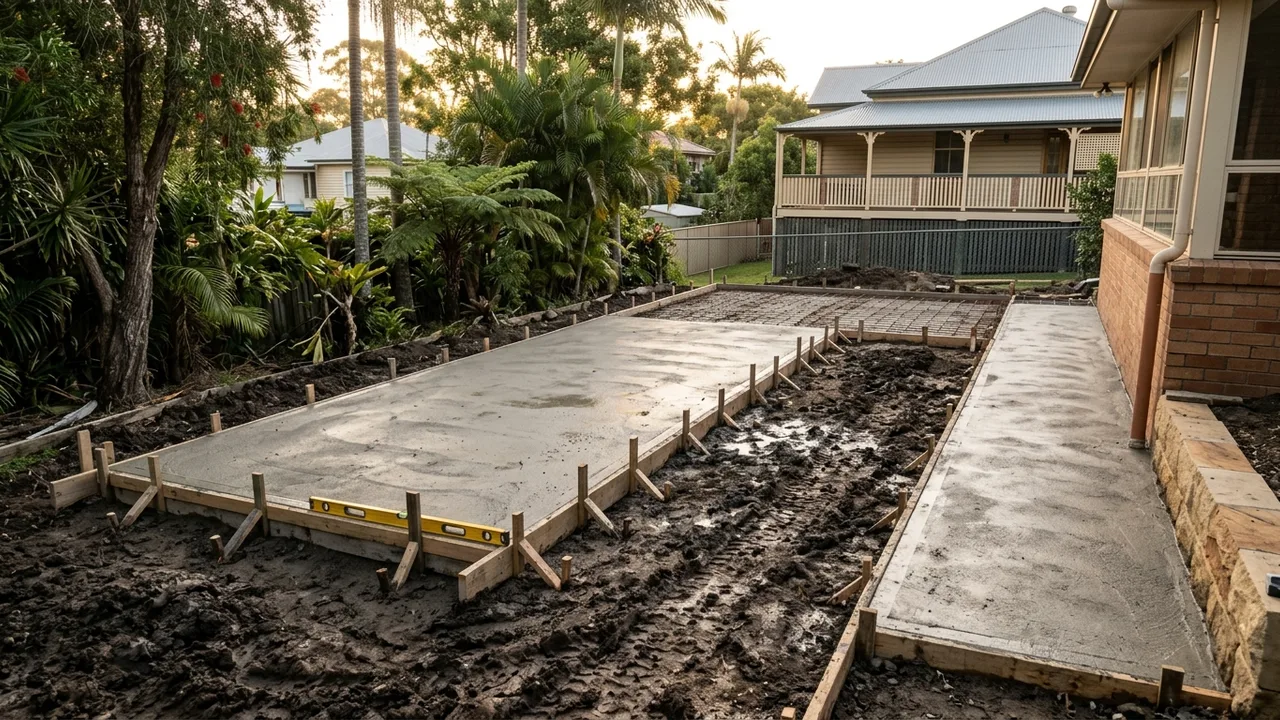
The trade-off is this: the steps that actually protect your concrete on reactive ground (site assessment, proper compaction, correct reinforcement layout, formed control joints) are exactly the steps that require experience and equipment. Hiring a plate compactor for the day is straightforward. Knowing whether the sub-base is actually adequately compacted, or whether you're just running the machine over the surface, is harder to judge without experience.
For anything over about 10 square metres, for any load-bearing slab (garage, shed, carport), or for a job where reactive soil characteristics are pronounced, the cost of professional work is typically justified by a longer service life. A driveway in this part of Brisbane can run anywhere from $3,500 to $10,000+ depending on size, finish and site conditions. That's money worth protecting with correct groundwork.
If a quote comes in notably lower than others and the preparation steps aren't mentioned or seem minimal, that's worth asking about directly.
What to do if you already have a cracked or heaving slab
Concrete repair and resurfacing is a real option for slabs that are structurally sound but cosmetically damaged. Surface cracks under about 3 mm wide, minor spalling (surface flaking) and cosmetic crazing can often be repaired and resurfaced successfully. That might cost $600-$2,500 depending on extent, versus $5,000-$15,000 for a full replacement.
The caveat: if the cracking is caused by ongoing reactive soil movement that hasn't been addressed, resurfacing over the top delays rather than solves the problem. A concreters worth their salt will tell you this honestly. If cracks are returning in the same locations within a year of previous repairs, or if sections of slab are lifting at the edges (a classic reactive soil signature), replacement with proper sub-base work is usually the better long-term spend.
Drainage improvements around the slab perimeter are sometimes all that's needed to slow ongoing movement. Redirecting downpipes away from the slab edge, or improving surface fall, can reduce the wet-dry cycling the soil is experiencing. It's not always glamorous work, but it can extend slab life significantly.
Getting the right advice before you commit
The most useful thing you can do before any new concrete work in Chelmer, Corinda, Graceville or the surrounding suburbs is to have a brief conversation with an experienced local concreters about what's actually under your block. If the property has had previous owners, there may be an existing soil report on file with the council or from a previous building approval.
Ask the person quoting your job a simple question: "What's the site classification here, and how are you accounting for that in the slab design?" A concreters who knows this area well will have a clear answer. That answer tells you more than any online review.
If you'd like to be connected with a local concrete operator who works regularly in the western suburbs and understands reactive soil conditions here, that's exactly what this service is set up to do. No obligation to take it further than a quote.
Quick answers