Concreting guide
Is there a best time of year to pour concrete in Brisbane?
Yes, Some Months Are Better Than Others
The short answer: in Brisbane, the cooler dry months from May through to September are generally the best time to pour concrete. That does not mean you cannot pour concrete in summer or during the wet season, but it does mean the job needs more planning, tighter timing, and a bit of extra care to get a good result.
If you are planning a driveway, slab, or path for your home in Chelmer, Sherwood, Graceville or anywhere else in Brisbane's inner west, here is what actually matters and why.
Why Concrete Cares About the Weather
Concrete does not simply dry. It cures, which is a chemical reaction called hydration where water binds with cement to form a hard, durable structure. That process is sensitive to temperature and moisture in ways that directly affect the strength and surface quality of the finished slab.
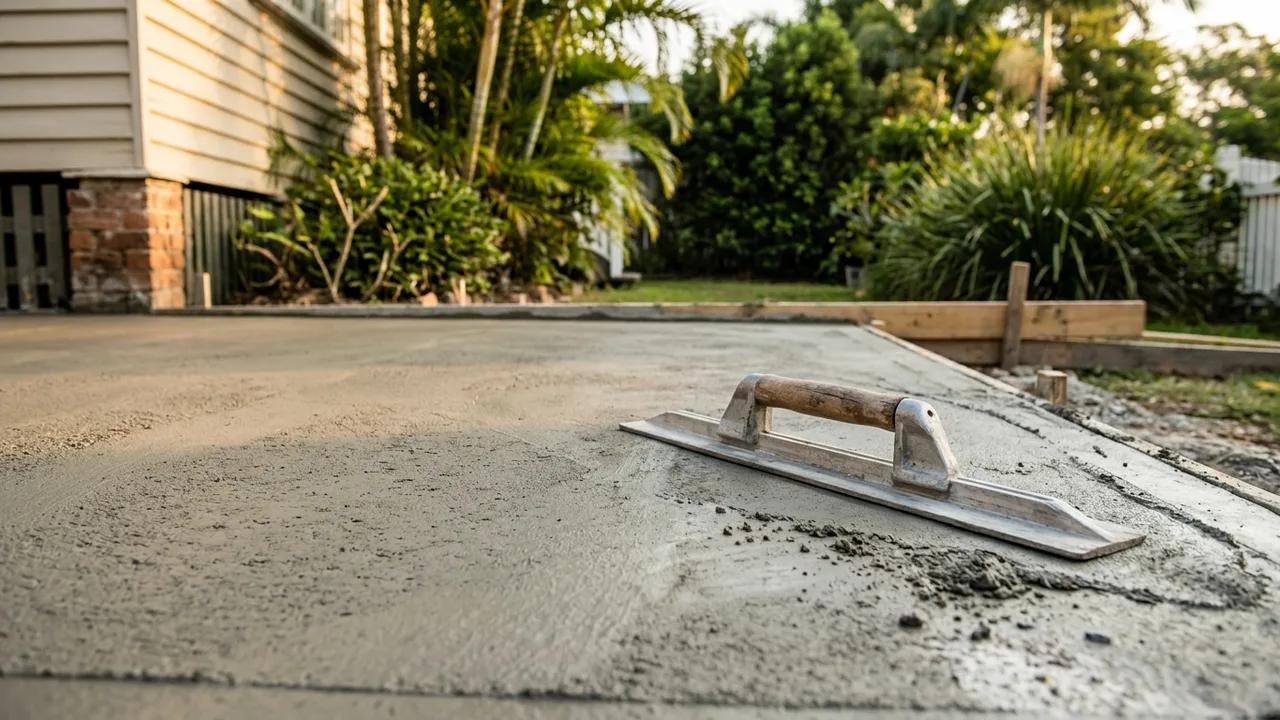
Too hot and the water in the mix evaporates before the cement has had time to hydrate properly. The result can be a weaker slab, surface cracking, or a dusty, powdery finish that flakes over time. Too cold and the reaction slows dramatically, leaving fresh concrete vulnerable to damage. Brisbane rarely gets cold enough to cause freeze damage, but it can get cool enough to slow curing in ways that matter.
Humidity and direct sun also affect the surface. In very dry, hot conditions, the top layer of a slab can skin over before the concrete underneath has settled. That traps bleed water below the surface and leads to delamination, where the top layer separates from the body of the slab.
What Brisbane's Climate Actually Looks Like, Season by Season
Brisbane has a subtropical climate, which means two fairly distinct seasons rather than four.
The wet season (roughly November to March) brings heat, humidity, afternoon storms, and occasional heavy rainfall. Average daytime temperatures in December and January typically sit around 29-31°C in the inner western suburbs, though it regularly climbs higher. Humidity is persistently high.
The dry season (roughly April to October) is drier, sunnier, and cooler. July average daytime temperatures in suburbs like Indooroopilly and Taringa tend to sit around 20-22°C, dropping into the low teens overnight. Humidity drops noticeably.
For concrete, the dry season consistently offers more predictable conditions. Moderate temperatures reduce the risk of rapid moisture loss. Lower humidity means better surface control. And the reduced chance of an afternoon thunderstorm rolling in before the concrete has set matters more than most homeowners realise.
The Wet Season: What Goes Wrong and What Can Be Managed
Pouring concrete from November through to March in Brisbane is not impossible, and plenty of contractors do it. But there are genuine risks worth understanding.
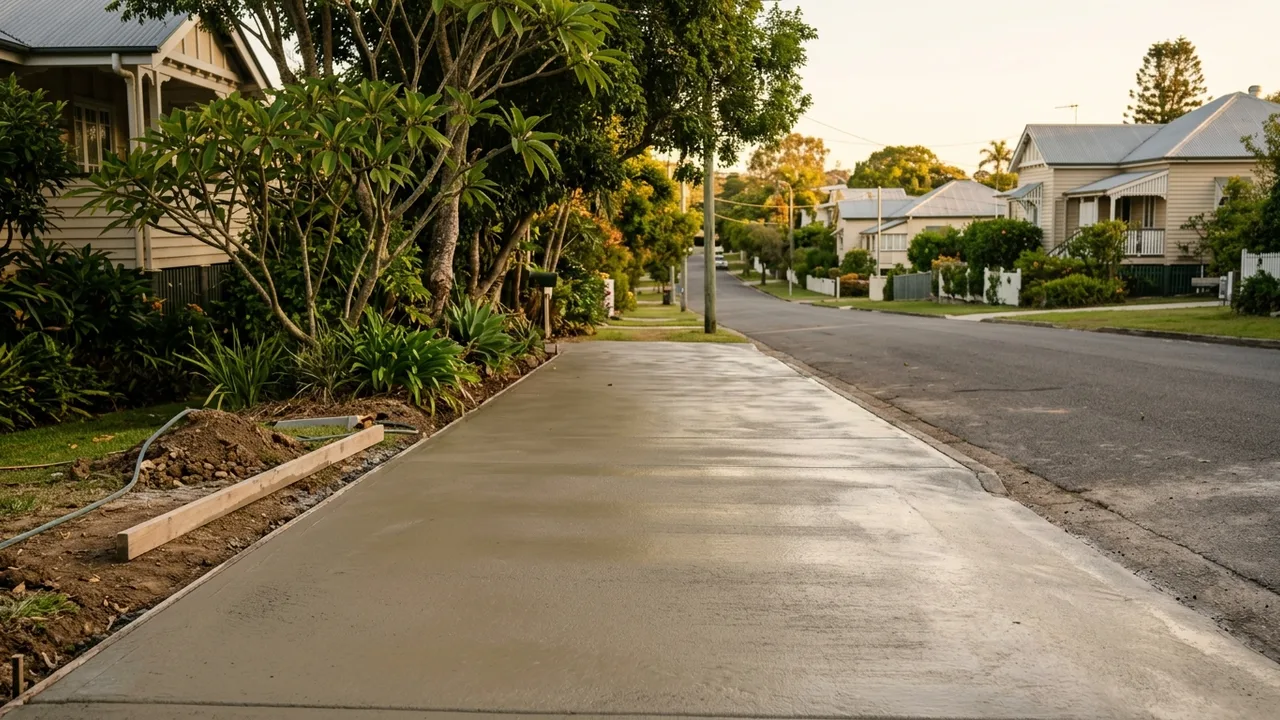
Rain on fresh concrete is the obvious one. A heavy shower hitting a slab that is still soft can wash out cement paste, leave surface pitting, and dilute the mix at the surface. Most experienced concreters will have a read on the day's forecast and can work around a dry morning. But Brisbane's afternoon storms are notoriously hard to predict precisely. If rain arrives before the slab has hardened enough, you have a problem.
Heat and direct sun are the less obvious issue. On a 32°C January day, a concrete slab sitting in full sun in a west-facing driveway in Chelmer or Moorooka can have its surface temperature significantly higher than the air temperature. That accelerates moisture loss fast. Finishing work becomes rushed and difficult. The window between the concrete being workable and being too stiff narrows considerably.
Experienced concreters manage this with a few techniques: earlier start times to beat the afternoon heat, curing compounds sprayed on immediately after finishing to lock in moisture, and shade where practical. These things help, but they add complexity and cost.
If you need the work done in summer for practical reasons, a short section of path or a small garden slab is more manageable than a full driveway pour. Larger jobs carry more risk simply because there is more surface area exposed for longer.
The Dry Season: Why May to September Works Well
The stretch from May through to September is genuinely the sweet spot for concrete work in Brisbane's inner west. Here is why it stacks up.
Temperatures are moderate, typically between 19°C and 26°C during working hours. That keeps the hydration process running at a good pace without the frantic rush to finish before the surface dries out. Lower humidity means bleed water rises to the surface more predictably, which helps with finishing. And the low rainfall probability means a concreter can plan a full day's pour with reasonable confidence.
May and September sit at either end of this window. Both are still generally good, though September can occasionally bring warm dry winds that accelerate surface drying. June, July, and August tend to be the most consistent months for conditions.
There is a practical trade-off here. Dry season is when demand for concrete work in Brisbane tends to peak. Good concreters book up. If you want a May start, you may need to lock in your quote in March or early April. Waiting until June to call around can mean a July or August pour at the earliest, which is still fine, just later than you hoped.
Does the Slab Type or Job Size Change the Calculus?
Broadly, yes.
A large driveway pour (say, a 60-70 square metre replacement driveway in a Sherwood or Graceville home) is the job most affected by conditions. More concrete, longer finishing time, more exposure. These jobs benefit most from a cool dry day in the May-September window.
A smaller entertaining slab or pathway is more forgiving. The pour is faster, finishing is quicker, and an experienced team can manage a summer pour with the right preparation. These jobs can proceed in the wet season with less risk.
Exposed aggregate finishes deserve a special mention. The process of washing the seeding aggregate to expose the stones relies on precise timing. Rush it and you lose too much surface cement; wait too long and the surface is too hard to wash properly. Hot, dry conditions narrow that window even further. If you are considering exposed aggregate for a driveway or path, the dry season is genuinely the better choice.
Concrete repair and resurfacing is somewhat different again. Small crack repairs can proceed year-round. Resurfacing overlays, though, bond to the existing slab and are sensitive to moisture and temperature in similar ways to a new pour.
A Practical Recommendation
If you have flexibility, plan your concrete work for June, July, or August. Book early, because that timing suits most Brisbane homeowners and decent concreters fill up. May and September are solid second choices. Avoid scheduling a large pour on a day where the forecast is above 32°C or where afternoon storms are likely, regardless of the month.
If your timeline forces a wet season pour, that is workable. Just use a concreter who has experience with local conditions, starts early in the day, and has a clear plan for curing and moisture control. A good result in January is absolutely achievable. It just takes more care.
The Brisbane inner west has its own micro-conditions worth factoring in. Elevated blocks in Chelmer, Indooroopilly, and St Lucia often get afternoon breezes that accelerate surface drying. Flat, exposed driveways in Moorooka and Fairfield can get fierce afternoon sun. Knowing your block's orientation and shade profile is worth mentioning to whoever you are getting a quote from.
Concrete is a long-term investment. A driveway or slab done properly should last decades. Choosing the right time of year, or at least understanding the trade-offs if you cannot, is one of the simpler ways to protect that investment.
Quick answers